
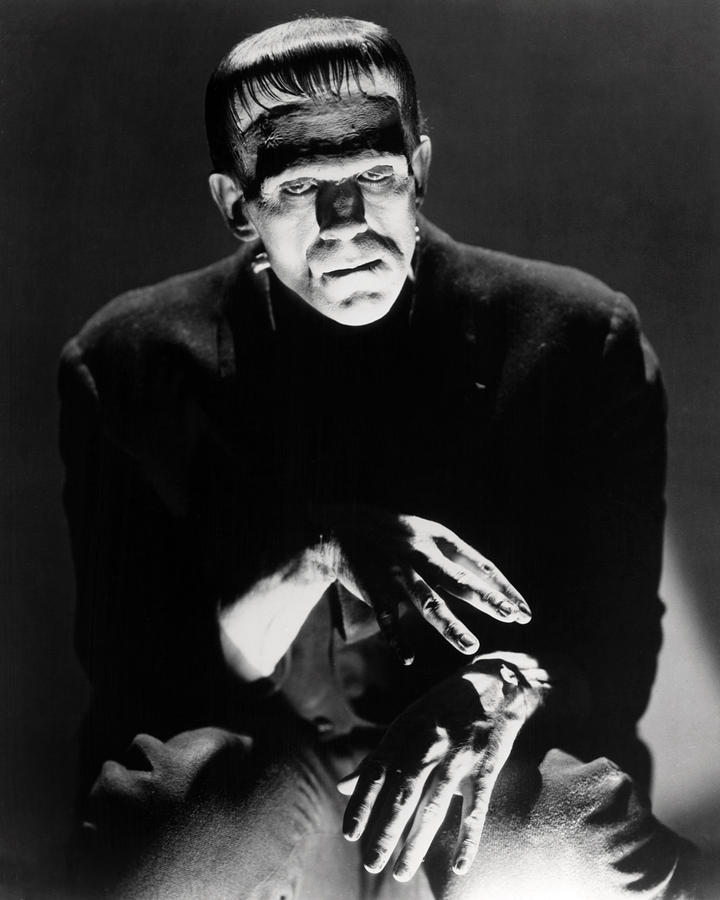
Since its publication in 1818, “Frankenstein; or, the Modern Prometheus” by Mary Shelley has largely been recognized as the origin of the Science Fiction genre. It tells the tale of one Victor Frankenstein, a young scientist with a God complex who creates a living creature from the parts of multiple deceased men. Upon completion of his experiment, Dr. Frankenstein practically abandons his creation due to its hideous appearance. The monster faces rejection both from his creator and the neighboring townspeople, who are horrified at his very existence. After attempting to exact revenge on Dr. Frankenstein and being chased off into the Arctic Ocean, the creature drifts away on an iceberg, never to been seen again.
In most classroom settings, “Frankenstein” is often observed through the discussion of themes such as the laws of nature and the danger that too much knowledge and power can cause. However, I’ve always believed that the most prevalent theme of the story is that of rejection.
On some level, we all fear rejection. At some point in our lives, we have felt concerned that another human being will reject us in some way; this can be as serious as a potential romantic partner turning down an invitation for coffee, or as simple as a stranger on the street not returning your smile. Fear of rejection is a natural human experience.
In Shelley’s novel, the creature manages to encounter feelings of rejection, despite not being naturally human. The creature was not created for the sake of being loved and cherished by Victor Frankenstein; he is instead a product of Frankenstein’s egotistical desire to play God. The creature is thrust into a world in which his sole purpose is to be a testament to Dr. Frankenstein’s scientific expertise. Despite his dedication to his experiment, Dr. Frankenstein immediately rejects the creature because it did not live up to his aesthetic expectations. The rejection that the creature faces is similar to that of children who are neglected by their parents. He is now being casted aside by the very person who brought him into the world. Though the creature is not biologically related to Dr. Frankenstein, that rejection still has a significant impact on him, as he knows no other connections or dynamics. Dr. Frankenstein is all he has, and he is immediately abandoned by him.
When the creature ventures out into the world around him, he is further rejected by the townspeople. Even though Dr. Frankenstein was not satisfied with the creature’s appearance, he at least was aware that such a creation was coming to life. The townspeople, however, had no warning, and are understandably terrified of him. There are a few occasions in which the creature still attempts to make connections with humans. In one instance, he becomes attached to a family that lives in an isolated cottage in the woods; he completes small tasks for them (such as restocking their firewood), while still staying hidden from their sight. He eventually attempts to interact with the family, and is initially accepted by the patriarch, who is blind. However, once other members of the family return to the cottage, he is subsequently run off the land. In another instance, he comes across a small child who had fallen in the river. He saves the toddler from drowning, but is accosted by the child’s father, who believed that the creature was actually endangering the child.
It is clear from both of these occurrences that the creature desperately wants to be seen as helpful and worthy of human interaction. It’s almost as if he understands that he is not to exist without serving as some sort of servant to others; whether it be existing as the result of a newfound scientific discovery, or as an individual that helps others with grueling physical labor, the creature knows on some level that he is not living for himself. One could argue that this natural inclination to serve others could be a result of him not being accepted by Dr. Frankenstein. It is possible that the creature believes that he will be accepted by others if he can prove that he is worthy and useful in some way. However, the creature eventually realizes that he will never have a place in this world, as every human he interacts with wants absolutely nothing to do with him. And so, realizing that his existence is an abomination against nature itself, the creature floats away on an ice raft; his fate is not explicitly stated in the book, however the image of the creature’s final days is that of loneliness and isolation.
The creature, quite frankly, never asked to be created. Instead, he was forced upon a world that he was never able to understand, and this world was never able to understand him. From the moment he opened his eyes, he was taught that he was not worthy of love or kindness. Once he inevitably lashes out due to the overwhelming feelings of rejection and isolation, he is further treated like a monster. The creature was never the villain of this story. He started off as a science experiment gone wrong (or right, depending on who you ask), and was eventually transformed into a monster by the actions of Frankenstein and the townspeople.
I’ve always believed that Frankenstein’s monster is the most tragic fictional character to exist. His story is a palpable exploration of the effects of rejection, especially of rejection from parental figures. He may not be considered a human by definition, but the creature in “Frankenstein” definitely struggles with some very human emotions and experiences during his tragically short existence.
Sometimes, I wish that the creature was real. Just so I could give the poor guy a hug.
 Ghoul Digest: a celebration of horror fiction
Leave a comment