
Warning: major spoilers ahead for Rosemary’s Baby and The Stepford Wives by Ira Levin
Ira Levin was an incredibly established author of both novels and plays, with his two most famous works falling within the horror genre. He is most well known for his novels Rosemary’s Baby and The Stepford Wives, which are both considered to be classics within the genre. These are two fairly influential horror novels that explore plenty of feminist themes. Ira Levin may have been a male author, but he sure knew how to get inside the minds of terrified women.
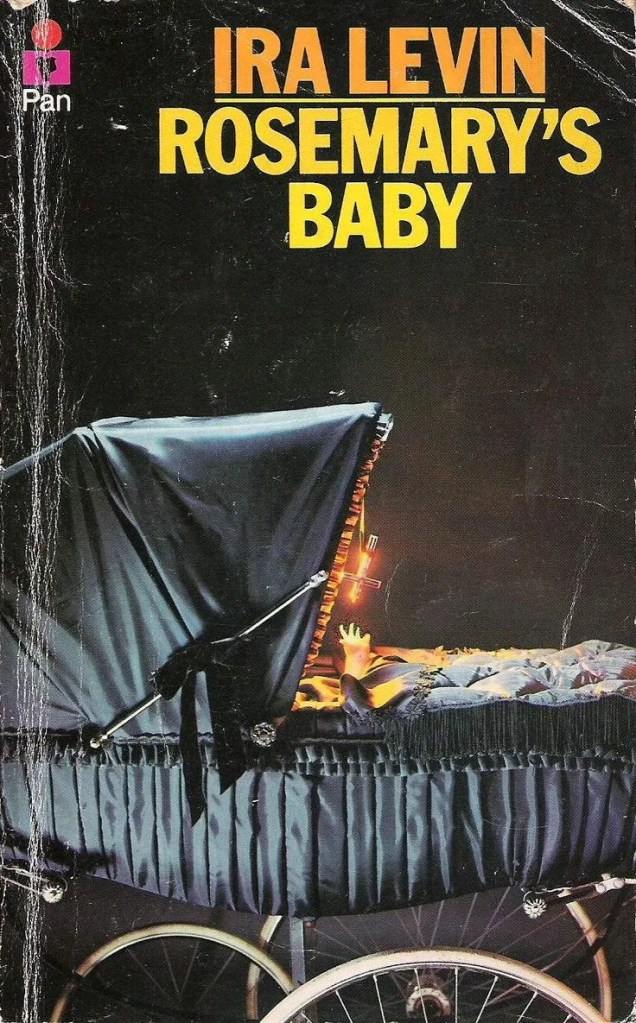
Rosemary’s Baby was published in 1967, and it follows Rosemary Woodhouse through the pregnancy from hell – literally. Rosemary and her actor husband, Guy, move into a new apartment in New York City to get a fresh start in life. They are welcomed to their building, which has a history of rumors of witchcraft, by their elderly neighbors Minnie and Roman Castravet. Despite previously wanting to put off having a child, Guy suddenly becomes incredibly enthusiastic about having a baby. That night, the couple has sex, and Rosemary dreams that she’s being assaulted by a demonic figure. She soon discovers she is pregnant, and her pregnancy symptoms quickly go from typical to worrisome. She continuously believes something is wrong with her or the baby, but everyone around her disregards her fears, writing her off as being hysteric. Tensions escalate until Rosemary discovers that Guy sacrificed the soul of her unborn baby to Satan, along with the cult lead by their elderly neighbors. Her son is born, and it is implied that he is indeed the son of Satan, not Guy.
I read Rosemary’s Baby when I was in high school, because I adored the 1968 film (which I must say is one of the most faithful book-to-film adaptations I’ve ever seen). I was not a mother at the time, nor am I a mother now, so I can’t exactly relate to the maternal angles explored here. However, Levin really pinpoints an issue that is incredibly common for women: our pain is often ignored and explained as us being hysterical instead of actually needing help. We are often considered to be emotional instead of logical, and our pain is downplayed by those around us. I personally experienced this type of treatment last year, when my former doctor continuously disregarded the stomach pains I was having over the course of many months. An emergency room visit revealed that I needed to have my gallbladder removed, despite my doctor insisting that nothing was wrong. Those months were incredibly mentally taxing, as not only was I in physical pain, but I was also mentally worn down from not being properly heard. It was an incredibly isolating and anxiety-inducing experience, to say the least. When I initially read Rosemary’s Baby back in high school, I felt very anxious reading about how Rosemary was suffering and was being dismissed by the people in her life. It felt like one prolonged panic attack that just couldn’t end. Levin portrays Rosemary’s anguish in a way that is frighteningly claustrophobic. It’s a terrifying story because of the reality of the themes within the pages. Though the novel features the occult and Satan, at its core, this is a novel about the female experience.
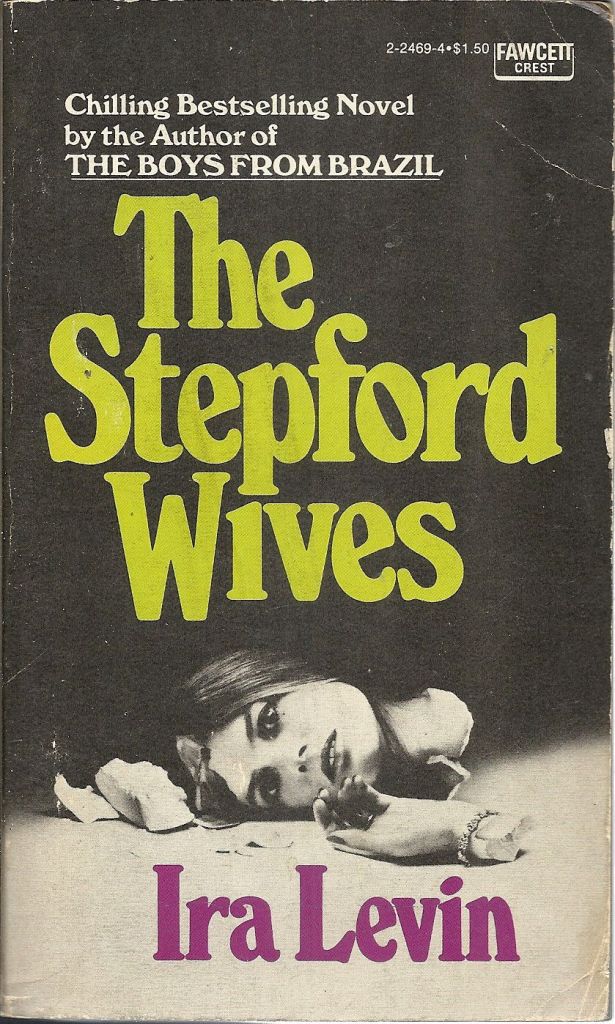
Five years after Rosemary’s Baby was published, Levin returned with another classic feminist horror/science-fiction novel The Stepford Wives. This short novel follows Joanna Eberhart and her family as they move to the idyllic suburb of Stepford, Connecticut. Everyone in the community is warm and welcoming, especially the women. The wives of Stepford are gorgeous creatures who are totally submissive to their husbands. Joanna becomes friends with some seemingly independent women in the town, but they eventually also begin to become more subdued and domestic over time. Eventually, Joanna begins to believe that the men of Stepford are replacing their wives with robots that are the perfect, ideal women who live to serve them. The story ends with a terrifying situation that poses the question: is something actually wrong with the wives in Stepford?
This novel is clearly an exploration of patriarchy and gender roles told through the lens of science fiction. Throughout the novel, Joanna makes it clear that she does not intend to lose her identity to being a housewife. As she watches more and more of her friends become robotic and submissive, the story becomes tight and claustrophobic (a running theme in Levin’s work, clearly). You can feel the metaphorical noose tightening around Joanna’s throat as she comes closer to uncovering the conspiracy in Stepford, and as she desperately tries to keep her individuality.
The Stepford Wives was released in 1972 and it is a testament to the social climate of the times. Feminism was a newly rising movement, which was met with opposition by plenty of men across the nation. The idea of women becoming more equal and liberated in society was arguably terrifying to the very people who wanted to keep women in line and under their control. That sentiment is very clear in this book, as the men actively double down on taking away their wives’ sense of self and individuality. The men have a secret society only available to the male members of the community that essentially runs the town. These men make the roles of their wives very clear: they are meant to raise the children, keep the home tidy, provide sexual pleasure, and nothing more. The Stepford Wives is a very direct yet bleak commentary on how society aims to suppress the freedom of women, a sentiment that is sadly still as prevalent today as it was when the book was published in 1972.
Whenever people discuss feminist horror, Ira Levin always is the first author to pop into my mind. The man knew how to perfectly capture the anxieties of being a woman. He had a very cynical and critical view of how society treats women, and that is very clear in his writing. Despite being a man, he really knew how to get inside a woman’s head and portray the fears and trials we experience on a daily basis. Rosemary’s Baby and The Stepford Wives are both terrifying stories in the way that they are so incredibly relatable. It’s easy to find yourself becoming angry and uneasy while reading these books, because the sad truth is that while they do feature some outlandish concepts such as robots and Satan, at the end of the day they are such real stories.
 Ghoul Digest: a celebration of horror fiction
Leave a comment