
“How cheap is life to someone who could do this? How entitled is the man who can treat another soul like a tool to be employed and then discarded when it breaks? How could one be so blind as to love such a man?” – Tim McGregor, Eynhallow
Plot Summary
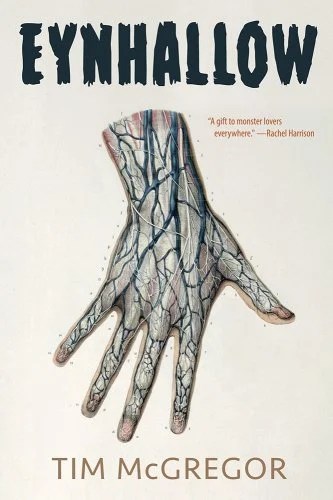
Agnes Tulloch lives an incredibly isolated and underwhelming life on Eynhallow, a small island on the Scotland coast that only is home to three other families. She was whisked away to this remote island with the promise of a bountiful life, only for her to be stuck raising four young children with an abusive and controlling husband. When a stranger arrives on the island, its inhabitants are immediately curious about their new neighbor. Who is this man? Why is he here?
When Agnes’ husband strikes an agreement with the stranger for her to become his housemaid, she is at first reluctant and infuriated. However, as she gets to know the wealthy stranger, she begins to become enraptured with him. He’s darkly charming and dangerously intelligent. He’s Victor Frankenstein. And he’s come to Eynhallow to pay his debts…even if it means creating a total abomination
My Thoughts & Interpretations
As I mentioned in my review of Our Hideous Progeny, I am a huge sucker for a Frankenstein retelling. While some people may think that these retellings are a tired topic, I would argue that since Frankenstein is such a heavily thematic text, there’s so many different interpretations we can make of the same story. I believe this is the first time I’ve come across a story that focuses on the creation of the Monster’s bride rather than the Monster himself (or a sequel of some sorts), and that immediately piqued my interest; I also prefer The Bride of Frankenstein (1935) over Frankenstein (1931), so that might also have had something to do with my immediate attraction to this novella.
Eynhallow is an incredibly atmospheric tale that is overwhelmingly lonely. From the very beginning, Agnes’s isolation from the world and the life she wishes to live is almost suffocating. She is a prisoner to her home, where she spends her days caring for her children and attempting to appease her abusive husband who controls every aspect of her life. When he later hires her out to Victor Frankenstein, she once again finds herself at the beck and call of a man; despite the fact she initially was meant to complete physical chores for Victor, she ends up being more of an emotional confidant than anything, and he is incredibly demanding. Whether she’s at home with her family or at Victor’s bungalow, Agnes is constantly living to serve others. She has no autonomy over her own life, or her own body.
Bodily autonomy is a pretty prevalent theme in the story of Frankenstein, and it’s no surprise that it plays a major role in Eynhallow. Pregnancy and motherhood are constant themes throughout the story, and naturally, the women involved have no say over what happens to their own bodies. The book opens with Agnes being assaulted by her husband, and her praying that she doesn’t end up pregnant from the encounter because she simply cannot bear to deal with either losing another child or giving birth and caring for a fifth child. Despite her protests, her husband still has unprotected sex with her, leaving her incredibly distraught. Her neighbor Katie is also heavily pregnant, and she is often instructed to stay hidden in her home so nobody will see her in her current condition; naturally, this results in her being depressed and antsy. Katie is expected to stay locked up at home so as not to inconvenience everyone else with her condition, while her husband is allowed to roam freely. When Katie goes into labor and starts to have complications, the immediate response from everyone present (except for Agnes) is to prioritize saving the unborn child rather than saving the woman who is a mother to many small children. The women of Eynhallow are essentially treated as breeding housemaids who have no say over their own lives. They live to please and take care of their men, and their life is easily disposable if it means bringing a new babe into the world. Even further, when the mothers are no longer able to care for their children (for whatever reason), the eldest daughter is immediately thrust into the caregiving role, robbing her of her childhood from that moment on. Interestingly, the women in this book are seemingly punished for their role in creating life, while Victor voluntarily creates life from dead flesh without any of the same repercussions. Though the villagers don’t know who Victor is or what he’s done in the past, he doesn’t have the threat of being treated the same way the women are. I found it pretty interesting that there is sort of a parallel between Victor and the women in this story; whereas the women are birthing and raising children, Victor is also creating life in his own way.
Even in the original Frankenstein story, there is a lack of bodily autonomy for the creatures that Victor creates. While the Monster was created purely to fuel Victor’s own ego, the female Monster is created purely for the Monster’s companionship. Even if they’re corpses, they still deserve to have control over their own bodies. Even though the Monster’s creation is horrifying, I find the female Monster’s purpose to be much more ominous. She’s immediately destroyed by the Monster when she rejects him, only minutes after being brought to life. She wasn’t even given a chance to experience the world before being discarded because she failed to live up to the expectations set forth for her by men, expectations she wasn’t even given time to process. Victor is indebted to the Monster and does not care who he has to destroy in order to keep his promise of creating a female companion. In both the original text and this interpretation, the only person who is allowed to have control is Victor; everyone around him is an unwilling participant in his quest for infamy. In this retelling, that leaves so many of our characters being hurt, abused, destroyed, and discarded all for the sake of Victor’s next creation. I don’t want to go into too much detail, because this is a book I believe is best to go into blind, but Eynhallow takes the existential horror of the Monster’s bride and ramps it all the way up to unimaginable levels of tragedy. It explores the horror of losing your humanity and becoming a monster in the eyes of everyone around you. It is relentlessly bleak and depressing, and by the final page you will be left feeling hollow and just devastated for (some of) the residents of Eynhallow.
Eynhallow is a masterpiece of a novella. It may be short, but it packs an incredibly powerful punch. It took a story that we’ve heard a thousand times before and managed to breathe new life into it. It is a very atmospheric tale, full of existential dread and devastating emotions. This is a must-read for fans of gothic horror.
 Ghoul Digest: a celebration of horror fiction
Leave a comment